


- New
World's Fastest Online Shopping Destination
World's Fastest Online Shopping Destination

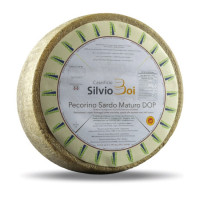
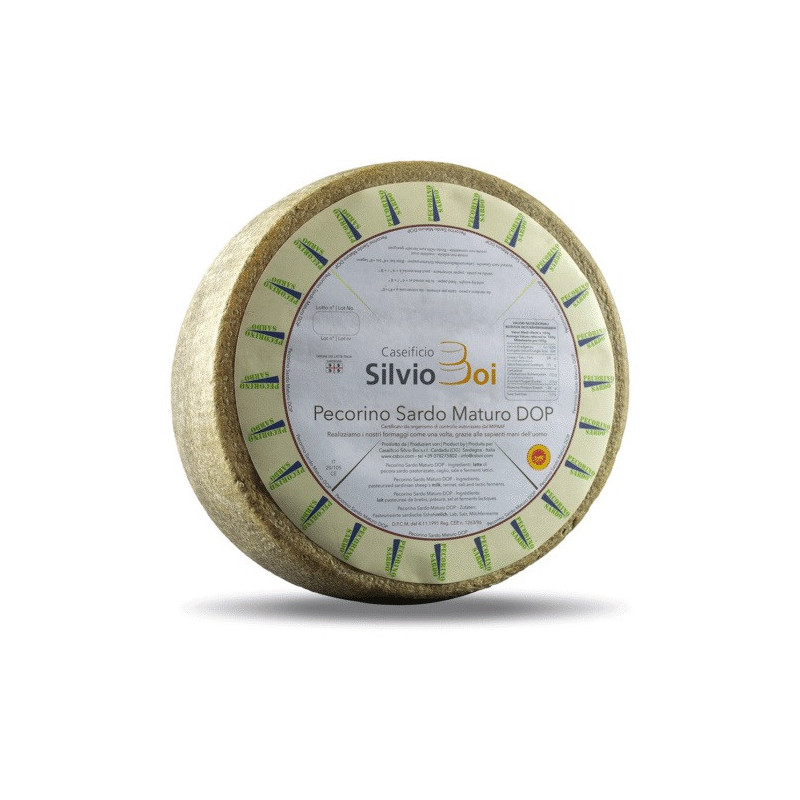
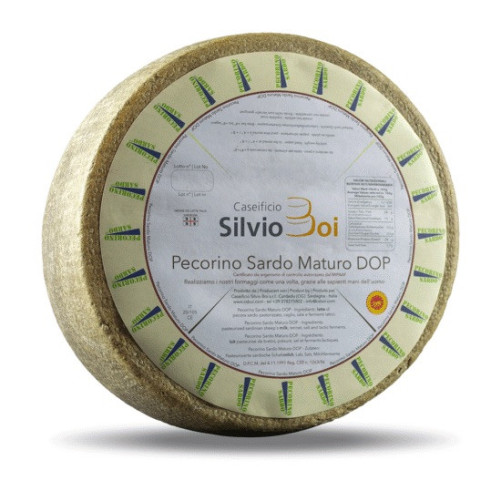
Pecorino Sardo PDO - Caseificio Silvio Boi
Pecorino Sardo Maturo PDO from Caseificio Silvio Boi is a hard sheep’s milk cheese made in Cardedu, Ogliastra, with pasteurised Sardinian sheep’s milk.
It is aged for over 60 days at controlled temperature and humidity.
Its firm, white interior with pale straw hues has aromas of butter and nuts and a bold, mildly piquant flavour.
Serve it in shavings with pane carasau and fig preserves, or grate it over culurgiones or malloreddus in tomato sauce. A chilli sauce complements its bold flavour on a cheeseboard.
Pecorino Sardo PDO - Caseificio Silvio Boi
Pecorino Sardo Maturo PDO opens with notes of mature milk, butter and nuts, followed by a bold flavour with a hint of piquancy. The cheese is hard and firm, white with pale straw hues and small holes scattered throughout. Serving it in shavings brings out its texture and aroma. Finely grated, even a light sprinkling carries its flavour throughout the dish.
Caseificio Silvio Boi makes it in Cardedu, in Ogliastra, with pasteurised Sardinian sheep’s milk, rennet, salt and lactic cultures. The curd is partially cooked, and the product specification requires the Maturo variety to mature for at least two months. The dairy ages it for over 60 days in rooms kept at 10–11 °C and 83–85% humidity. The Pecorino Sardo PDO designation also covers the Dolce variety, which has a shorter maturation period. Ageing time is one of the features that distinguish the two varieties.
The dairy takes its name from Silvio Boi, who started the business in Ogliastra in the 1950s. It remains family-run, with the founder’s children carrying on the business. The dairy is a founding member of the Consortium for the Protection of Pecorino Sardo PDO. The product specification designates the whole of Sardinia as the area where the milk is sourced and the cheese is made and aged. The dairy makes this pecorino in Cardedu.
A shaving of cheese with pane carasau is the simplest way to try it. For an aperitif, serve it with fig preserves and a chilli sauce on the side. The fig preserves add sweetness, while the sauce complements the cheese’s piquant finish. If you serve it at the end of a meal, pair it with a few slices of pear. As a starter, it also goes well with sweet-and-sour vegetables, whose tang brightens each bite.
In Sardinian cooking, grate it over freshly drained culurgiones, potato ravioli or malloreddus in tomato sauce. Try it in zuppa gallurese, too. Scatter it between the layers of bread and broth, then sprinkle a little over the top before baking. For an everyday lunch, try it in a basil pesto. Add it to the other ingredients a little at a time, tasting before adjusting the salt. For a simple tray of roasted vegetables, add the grated cheese in the final minutes of cooking for a golden, savoury topping.
Data sheet
Specific References
No customer reviews for the moment.
Pecorino Sardo PDO - Caseificio Silvio Boi
Pecorino Sardo Maturo PDO from Caseificio Silvio Boi is a hard sheep’s milk cheese made in Cardedu, Ogliastra, with pasteurised Sardinian sheep’s milk.
It is aged for over 60 days at controlled temperature and humidity.
Its firm, white interior with pale straw hues has aromas of butter and nuts and a bold, mildly piquant flavour.
Serve it in shavings with pane carasau and fig preserves, or grate it over culurgiones or malloreddus in tomato sauce. A chilli sauce complements its bold flavour on a cheeseboard.


